What was a major factor that led the United States to enter World War I?
Why did the US enter Earth War I?
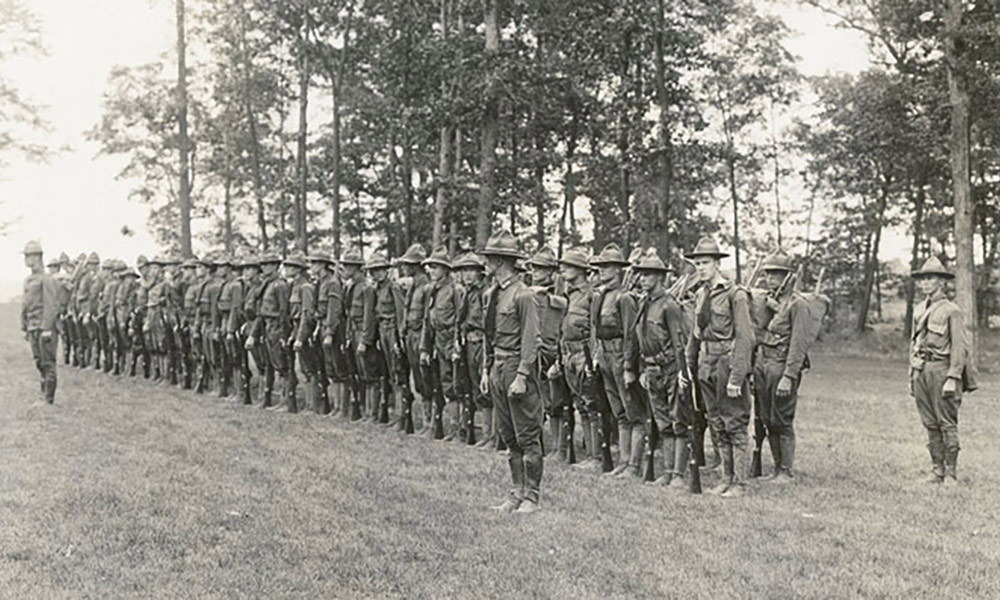 The Students Army Grooming Corps at the University of Rochester in 1917. Nov 11, 2018 marks the 100th anniversary of the end of the World War I. (University photo / Section of Rare Books, Special Collections, and Preservation)

Hein Goemans.
The US entered World War I considering Germany embarked on a deadly take chances.
Frg sank many American merchant ships around the British Isles which prompted the American entry into the war.
Rochester political scientist Hein Goemans answers the question why Germany was willing to risk American entry into the war.
Woodrow Wilson did not want state of war.
When Earth State of war I erupted in Europe in 1914, the 28th U.S. president pledged neutrality, in sync with prevailing American public stance.
Just while Wilson tried to avoid war for the side by side iii years, favoring instead a negotiated collective approach to international stability, he was rapidly running out of options. Tensions heightened as Germany tried to isolate Britain in 1915 and announced unrestricted attacks confronting all ships that entered the state of war zone effectually the British Isles.
In early April 1917, with the price in sunken U.South. merchant ships and noncombatant casualties rise, Wilson asked Congress for "a war to end all wars" that would "make the world safe for commonwealth." A hundred years ago, on April 6, 1917, Congress thus voted to declare war on Germany, joining the bloody battle—so optimistically chosen the "Great State of war."
"The U.S. declaration of war, in essence, was a recognition of the fact that Germany had chosen to impose a very risky gamble on the U.S.—risky for Germany, just the only way they thought they could obtain the victory they needed at domicile," says University of Rochester associate professor of political science Hein Goemans.
A specialist in international relations and conflict, Goemans is the author of War and Punishment: The Causes of War Termination and the First World War (Princeton University Printing, 2000). Since then, he has likewise coauthored a volume on leaders and war initiation, Leaders and International Conflict (Cambridge University Press, 2011).
IN THIS EPISODE OF THE QUADCAST: In an interview with associate professor of political scientific discipline Hein Goemans, the expert on conflict points out that Germany was enlightened that its unrestricted submarine warfare would provoke America to enter WWI.
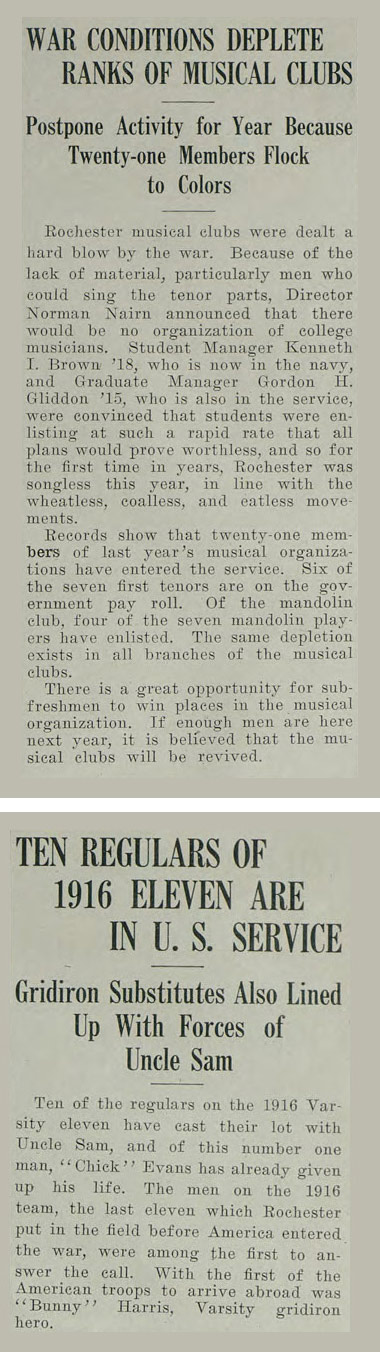
A special "War Issue" of the Campus Times from June 1918 shows the impact of the Great War on University life. (Academy images / Department of Rare Books, Special Collections, and Preservation)
"The Germans were well enlightened that the U.S. could not and would not accept unrestricted submarine warfare, but launched information technology anyway," says Goemans. "The U.S. annunciation of war was thus already taken into account when the final decision for unrestricted submarine warfare was made in January 1917. Indeed, Hindenburg explicitly admitted the 24-hour interval before 'Nosotros count upon war with America.'"
So why would the German language leadership under Paul von Hindenburg take such a big risk?
"It was a risk, which was very probable to hurt them in the long run," explains Goemans. "They thought the gamble would open upwards a window of opportunity in which they could defeat the British. If they defeated the British, and then they could prevent Americans from coming to the mainland and they would have a victorious terminate to the war."
Goemans argues that the Germans had seen how long information technology had taken the British soldiers from the time they arrived in France until the time they were ready for a major offensive at the Somme. The Germans calculated correctly that it would have the Americans at least as long to get their troops across the body of water and ready to fight.
"The British thought: 'Nosotros fight the war by heroically stepping out of the trenches and locking arms and looking threateningly at the Germans and thereby defeat them,' " Goemans says. "The British were shot down in large numbers, the Americans made the same error. They refused to learn the technical and strategic lessons learned at great cost past the French and British."
Meanwhile, the German ruling class, led past an alliance of aloof landowners and industrialists, was fighting for its very ain survival, threatened by seismic social and political upheaval.
"A victorious ending to the war was necessary for them because without victory, without spoils to divert those who had been loyal Germans—loyal to the sometime government—they would confront a revolution on the domicile forepart, and a revolution not unlike the one that the Russians had experienced," explains Goemans.
"You have to enquire also, 'Why does this course of dispute resolution work? Why does killing hundreds of millions of people brand an agreement possible where there was no agreement possible before?' "
While unrestricted submarine warfare is, of grade, the textbook answer as to why the U.S. entered the state of war, there's likewise the infamous Zimmerman telegram.
Cabled by German foreign minister Arthur Zimmermann in January 1917 to the Mexican embassy, the hole-and-corner diplomatic communication was intercepted and decoded by British intelligence. In the telegram, Zimmermann proposed a war machine alliance between Federal republic of germany, Mexico, and Nihon—should the United States enter the war. Information technology basically said, "If you want to, we will help yous in the effort of helping yous regain some of your lost territories from the Us. The territory you lost in 1848 and subsequently," explains Goemans, who calls the telegram "a ludicrous proposal."
Mexico would be given Texas, Arizona, and New Mexico as spoils, according to the German language plan. While Goemans says he never found any indication in official notes and papers from the time that the U.S. government took this threat seriously, it notwithstanding became "a propaganda gift that could be used against the Germans more than it was a real factor in the decision making of the Americans [to become to war]." However, in one case its contents were splashed across newspaper front pages, American public opinion turned strongly confronting Germany, enflaming pro-war sentiments.
3 years earlier, long-smoldering rivalries in Europe over territory and borders had come up to a caput with the assassination of the Archduke Franz Ferdinand of Austria and his wife by a Serbian nationalist on June 28, 1914. The bump-off, while ultimately a scapegoat, became the goad for the start of Earth War I, exactly i calendar month later.
By the terminate of 1915, Republic of austria-Hungary, Bulgaria, Germany, and the Ottoman Empire were battling against the Allied Powers of Uk, French republic, Russia, Italy, Belgium, Serbia, Montenegro, and Nippon.
Frg formally surrendered on November eleven, 1918. In those nineteen months of U.S. date, more than two million American soldiers served on the battlefields of Western Europe—and fifty,000 of them lost their lives.
WW1 dates
World War ane was fought betwixt July 28, 1914 – Nov xi, 1918
To Goemans, World War I illustrates a modern insight into the nature of war—that it basically takes ii sides to fight. One side can e'er capitulate or accede to the other side's demands, trying to avert war. Information technology raises the question of why all players decide to fight.
"I study war non because information technology'south cool, or because there are big explosions and big weapons, but considering it's truly horrific," says Goemans. "But at the aforementioned time you have to ask also, 'Why does this form of dispute resolution piece of work? Why does killing hundreds of millions of people brand an understanding possible where in that location was no agreement possible before?' "
Alas, the peace that followed the "war to finish all wars," lasted only two decades.
Learn how yous tin use to study at the University of Rochester.
Read more
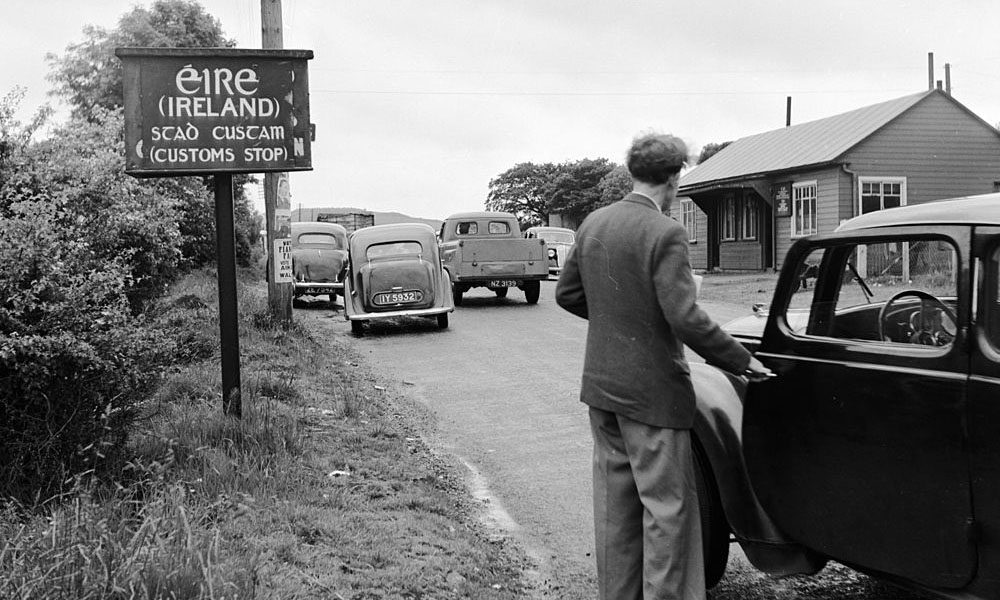 100 years on: The segmentation of Republic of ireland explained
Stewart Weaver, a professor of history whose teaching interests include Uk, Republic of ireland, India, exploration, and the environment, offers an explainer on the sectionalisation of Ireland, which took place a century ago.
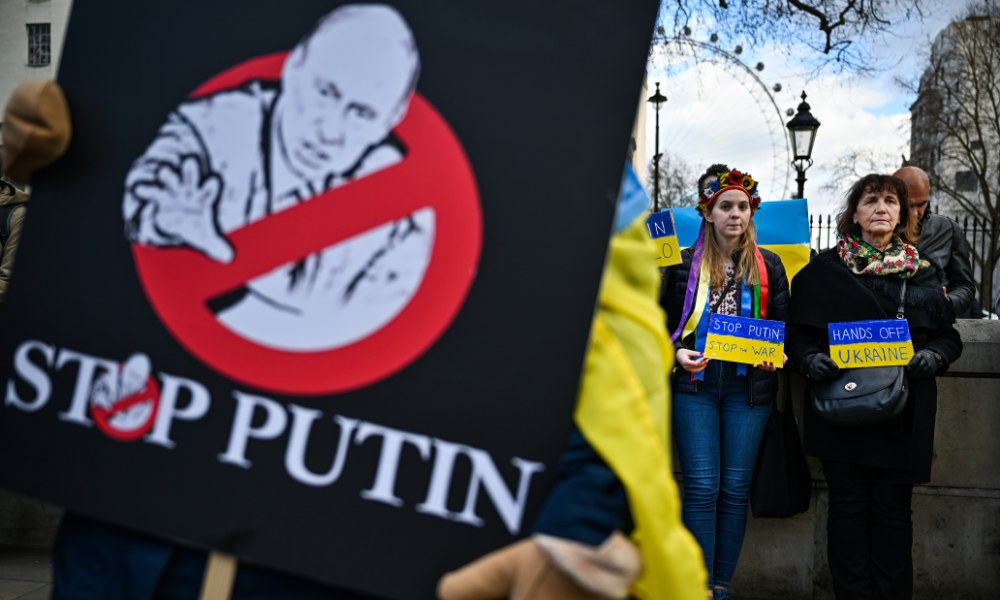 Why is Putin invading Ukraine?
Political scientist Hein Goemans, Rochester's expert on international conflicts, explains why Ukraine'southward fate might be tied to Putin's survival—and why this is the most dangerous geopolitical situation since World War 2.
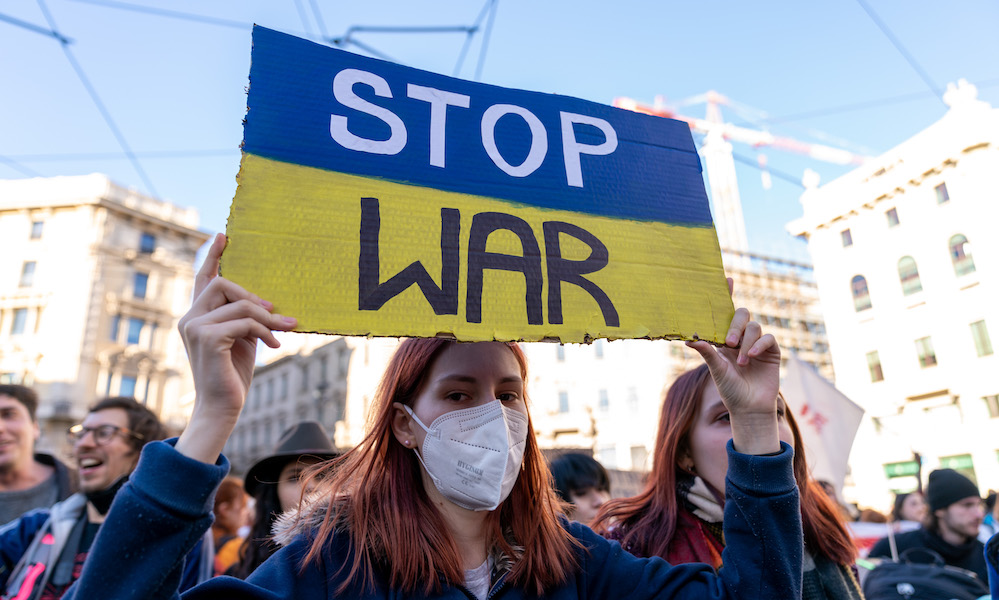 How to finish the war in Ukraine
Rochester political scientist Hein Goemans, an expert on war termination, applies possible scenarios to Russia'south invasion of Ukraine.
Category: Society & Culture
huddlestonthatock.blogspot.com
Source: https://www.rochester.edu/newscenter/looking-back-100-years-u-s-enters-world-war-i-on-april-6-1917/

Mag-post ng isang Komento for "What was a major factor that led the United States to enter World War I?"